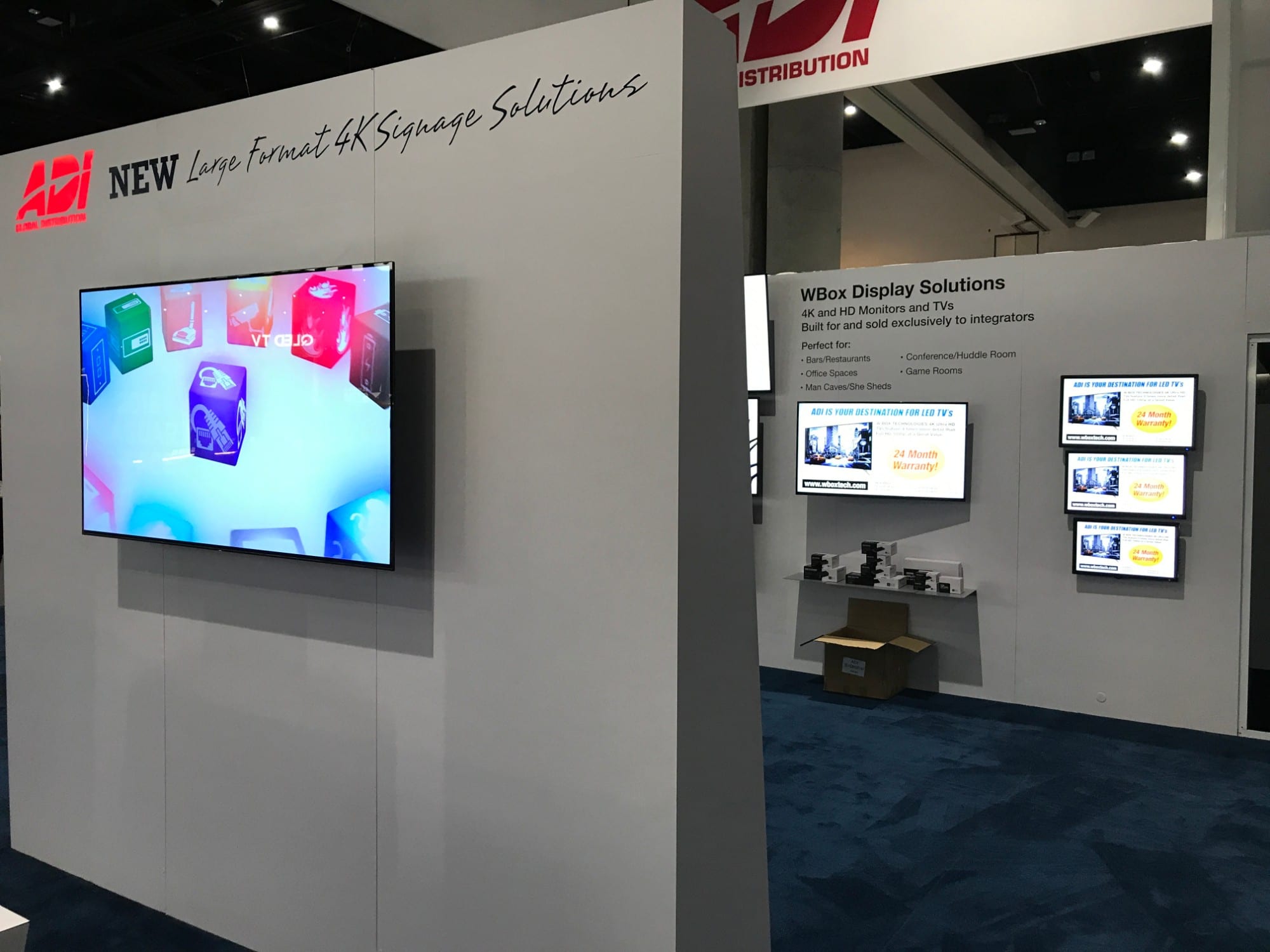
The Rise of Interactive AV in Exhibitions – and What Makes It Work on the Floor
Every booth has a wall now. The ones with a line in front of them have something to touch. What separates interactive AV that draws a crowd from a screen that plays a loop – from a company that has built both.
· AV, Tips & Guides
Walk a trade show floor this year and count the screens. Every booth has one. Most of them are playing a loop that was finished the night before, and the people walking past treat them the way they treat a television in a waiting room.
Then there is the booth with a line in front of it. It has a screen too – usually a bigger one – but the difference is not the size. Someone at the front of the line is touching it, and it is answering.
That is the whole rise of interactive AV in one scene. The hardware got cheap and good. An LED wall that cost a year's marketing budget a decade ago can be rented for a show. What did not get cheap is the thing that makes a visitor stop: a piece that responds to them.
Our founder's first career was installing interactive technology on show floors around the world for global brands. Interactive AV-IT still does that work, and the same pieces now go into lobbies, showrooms, schools and libraries. Here is what we have learned about what works on a floor, and what gets switched off by the second day.
"Interactive" has to mean something
A video loop with a touch icon in the corner is not interactive. A piece earns the word when four things are true:
- It answers in under a second. A visitor who touches a screen and sees nothing happen assumes it is broken, and nobody tries twice.
- A stranger can use it without instructions. The person who walks up has never seen it, is holding a coffee, and will give it three seconds.
- It resets itself. When they walk away, the next person should find it exactly as the first one did, without a staff member reaching behind it.
- It survives the crowd. Five thousand hands over three days, a dropped lanyard, a child. Show conditions are the specification.
The pieces that fail usually fail the first test, because they were built as content and then had touch added at the end. The ones that hold up were designed as software from the start.
Where it is being used
The show floor is where interactive AV gets noticed, but it is not where most of it ends up living.
Trade show booths. For ADI Global we have built video walls and demo stations that let a visitor try a product rather than watch it. The wall gets the attention from across the hall; the demo station is what the conversation happens around.
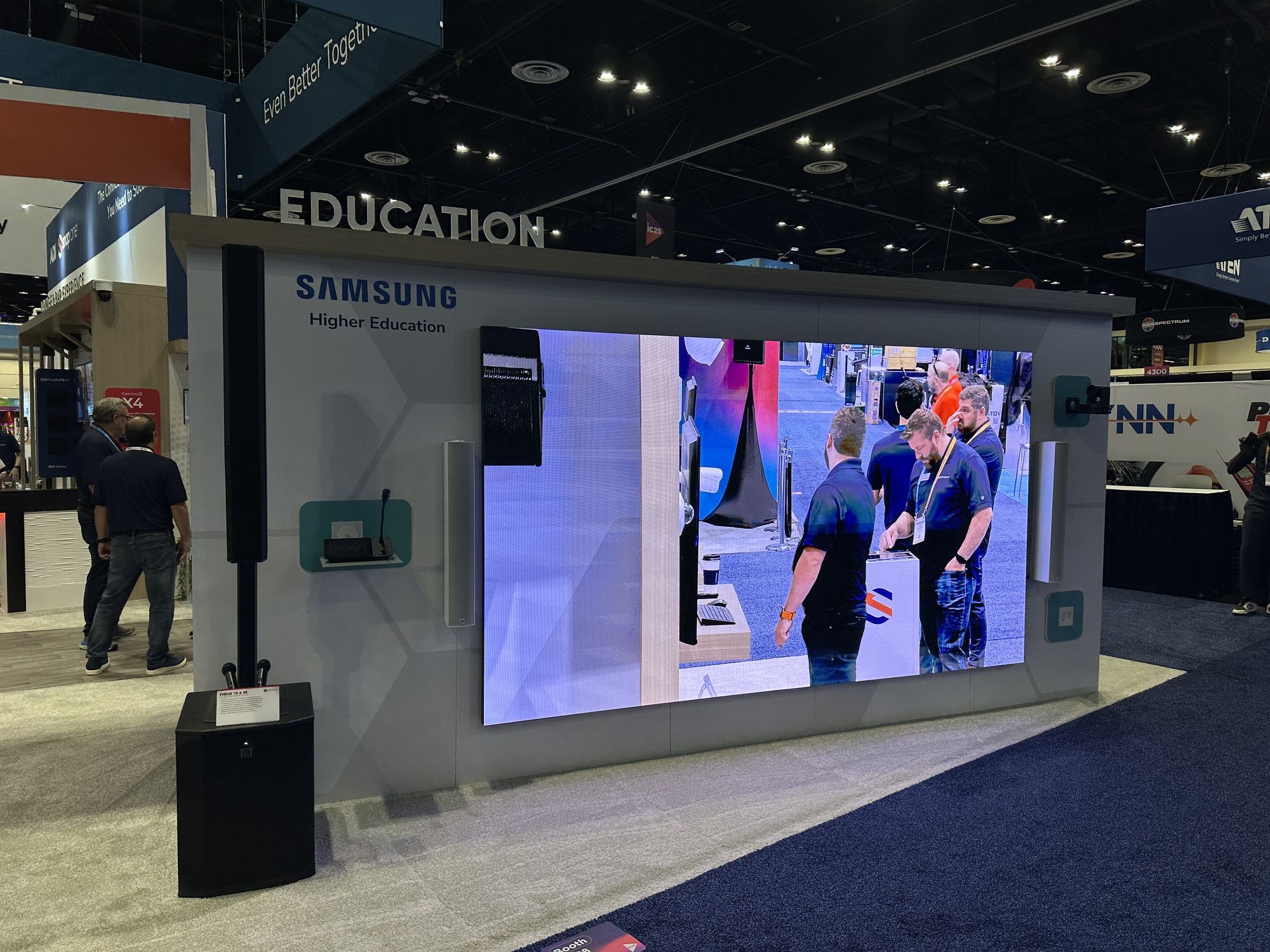
The LED wall in ADI Global’s education zone at InfoComm 2025, running live camera footage of the aisle.
Corporate heritage walls. The 25-foot interactive History of Canon wall in Canon U.S.A.'s headquarters in Melville scrubs through the company's history from 1933, over a live reef, built into the millwork. It was designed with the exhibit designers rather than after them, and it is still running today. A heritage wall is a trade show exhibit that never gets taken down.
Recognition displays. Bay Shore High School's digital Hall of Fame and Veterans Wall of Honor replaced a plaque wall that had run out of room. A visitor can search for a name; a photo and a story sit beside it; the list grows every year without a sign shop.
Public rooms. The media room at Riverhead Public Library is used by people who have never met the person who built it. That is the standard for public interactive work: anyone walks in, anyone can use it.
The trends, and what we actually think of them
Every article on this subject ends with a trend list. Here is ours, with the view from the floor.
LED walls. Yes. The price has dropped far enough that the question is no longer whether you can have one, but what it shows. Sight lines matter more than pixel pitch: a wall nobody can see from the aisle is an expensive backdrop.
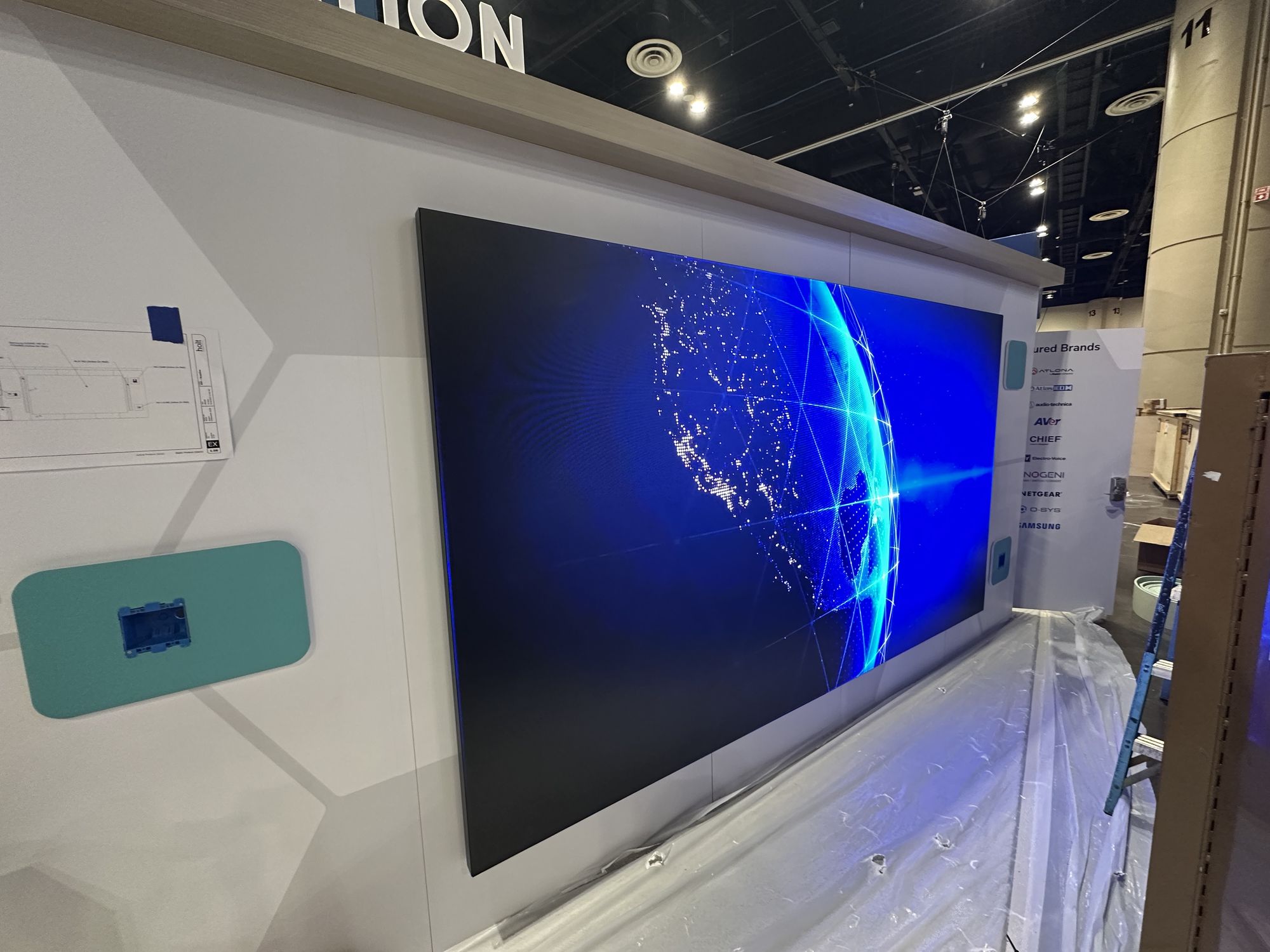
The same wall the day before: lit, tested, sheeting still on the floor.
Touch. The most reliable form of interaction there is, and the one visitors already know how to do. On a show floor, touch beats gesture every time. Gesture control draws a crowd that watches one person wave their arms, then leaves.
AR and VR. Memorable, and one person at a time. A headset is a queue, and a queue is a cost: count how many visitors an hour the piece can actually serve before you plan a booth around it.
Hybrid and streaming. The booth as a studio, feeding a session to people who did not travel. The video is the easy half. Audio on a show floor is where these fail, and it is the half nobody budgets for.
Kiosks that capture leads. This is the one we would push on. An interactive piece can count every touch, how long each visitor stayed, and which stories they opened. That is the first honest measurement a booth has ever produced, and it belongs in your CRM, not in a spreadsheet someone emails after the show.
Four questions before you sign for anything
Whether you are planning a booth or a lobby, these are the questions we would ask first.
- Is the content built for the actual screen? The commonest failure we see on a floor is content made for a screen of a different shape from the one that arrived. Resolution, aspect ratio and viewing distance are decided before the first frame is designed, not after.
- Who is on the floor at eight in the morning on opening day? Something will not work. A rental company drops the gear and leaves. We stay for the length of the show, with spares, so your team talks to visitors instead of to a help line.
- What happens to it after the show? A piece that goes back into a crate has a cost; a piece that goes into your lobby or showroom has a second life. Plan the second life before the show, and the budget looks different.
- What will you know afterwards? If the answer is "it looked great," the piece was a backdrop. Decide what it should count, and make sure the numbers reach the people who follow up.
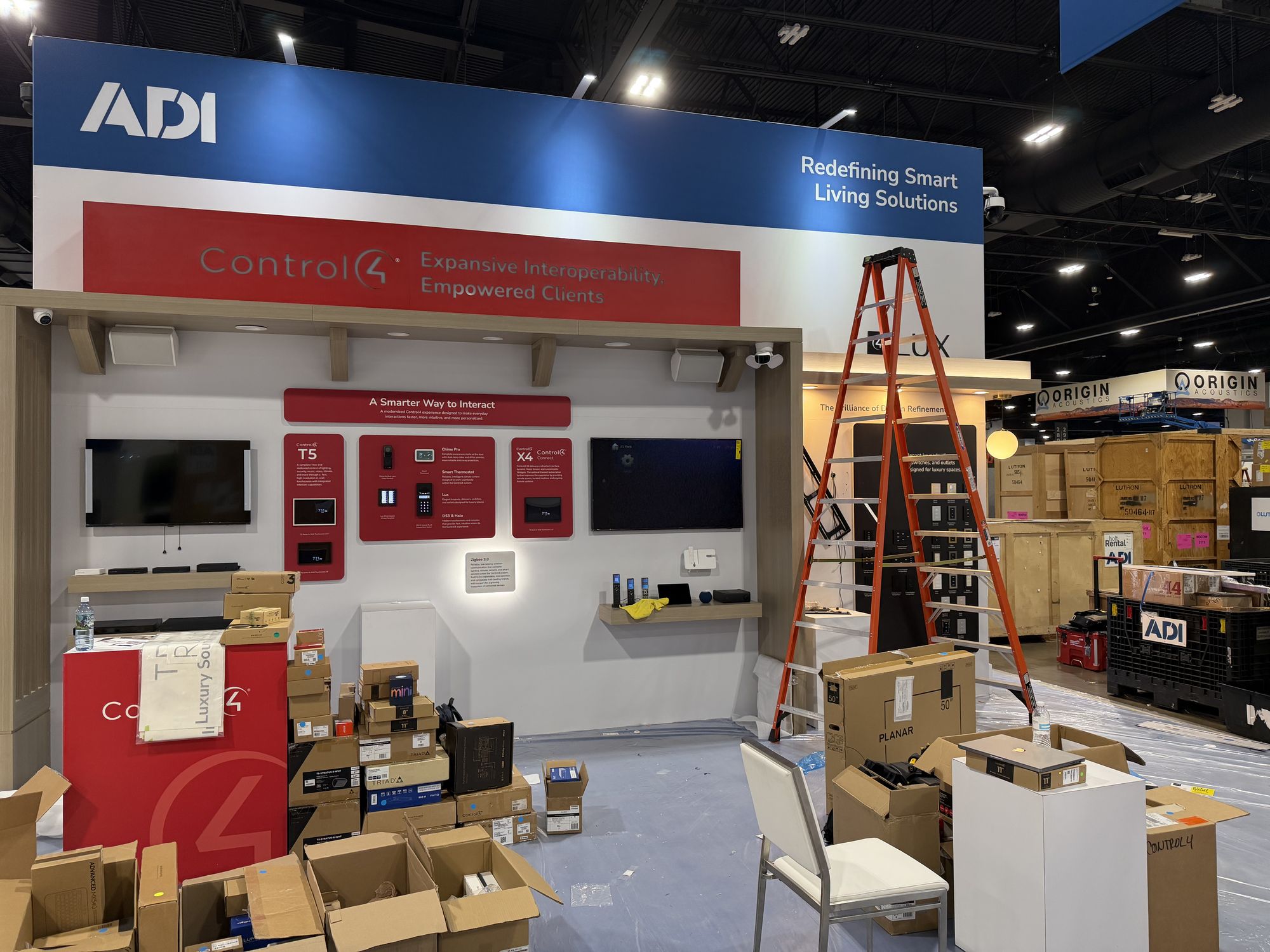
Build day at CEDIA 2026. Everything that has to work at eight the next morning is on this floor.
The part that gets written
Here is our own spin on all of this, and it is the reason we are an IT company as well as an AV one.
Most interactive pieces on a show floor are a display playing a file. When the story changes, someone re-exports the file. When the show is over, the file goes in a drawer.
Ours run on software, and the software gets written for the piece. That is what lets a heritage wall built years ago show a chapter that did not exist when it was installed, and lets a recognition display add a name without a visit from us. It is also what makes the measurement possible: software can count, a video cannot. And because the same team runs the network it sits on, a piece in your lobby is monitored the way your servers are, and the first person to find out it has stopped is us, not a visitor.
Interactive AV is rising on show floors because it works. The pieces that keep working are the ones built as software, for strangers, with someone on the floor and a plan for the day after.
If you are planning a booth or a lobby, fifteen minutes with us will tell you what it should do, what it should count, and roughly what it costs. The rooms and walls we have built are on the AV page, and the trade show work is described on its own page.
Ready to talk?
Book a fifteen-minute call, or tell us what you are dealing with and we will tell you what we would check first. No obligation.